VIDEO MARKETING
The Latest Trends in Video Marketing: AI, Short-Form, Interactive, Vertical, and Live Streaming Strategies for 2025
Video marketing trends describe the evolving techniques, formats, and distribution strategies brands use to capture attention, generate leads, and convert audiences across social platforms.
In 2025, those trends center on AI-driven production, short-form vertical content, interactive experiences, and live streaming — each trend changing how local businesses win attention and measurable outcomes.
This article explains why these trends matter, how they work (mechanisms and reasons), and practical steps small businesses can apply to improve reach and conversion. Readers will learn the top trends for 2025, how AI streamlines production and personalization, platform-specific short-form tactics for founders, interactive formats that drive lead capture, vertical and live strategies for mobile-first audiences, and emerging formats like UGC and AR/VR. Sections include practical checklists, comparison tables for quick decisions, and compact examples tailored for local businesses in Billings, Montana. By the end, you will have an actionable roadmap to test pilots, scale content, and map each trend to outcomes like increased awareness, engagement, and local leads.
What Are the Top Video Marketing Trends for 2025?
Top video marketing trends for 2025 cluster around five core shifts: AI-powered production, dominance of short-form vertical video, interactive formats that convert, strategic live streaming, and immersive technologies like AR/VR. Each trend accelerates because mobile consumption patterns, platform recommendation engines, and cheaper production tools change the cost-benefit for small brands. Understanding these trends helps marketers prioritize experiments and align KPIs like view-through rate, engagement, and conversion. The next subsections unpack two major drivers — AI and short-form dominance — and then we map each trend to practical implications for local businesses.
AI is transforming production workflows by automating editing, captions, and variant generation while preserving human creative control; this speeds content throughput and reduces per-video cost. Short-form formats win due to reduced attention spans and platform amplifiers that reward high-engagement clips, enabling rapid organic reach with clear hook-value-CTA structures. Interactive video increases two-way engagement by embedding CTAs, polls, and shoppable overlays that create direct lead paths. Vertical framing maximizes mobile real estate and completion rates, especially for social feeds. Live streaming adds authenticity and immediate interaction, which supports event promotion and community building. Below is a concise list of the top trends with brief rationale.
AI-Driven Video Generation: Limitations, Impact, and Implications
This paper presents an in-depth analysis of AI-driven video generation, with a specific focus on addressing the limitations and exploring the impact and implications of this transformative technology within the media landscape.
Innovative Workflow for AI-Generated Video: Addressing Limitations, Impact and Implications, A Samad, 2024
- AI-powered video production: Automates editing and personalization to increase output and reduce cost per asset.
- Short-form vertical video: Matches mobile behavior and platform algorithms for fast reach and virality.
- Interactive video experiences: Adds clickable CTAs, polls, and shoppable overlays to convert viewers into leads.
- Live streaming and real-time engagement: Builds authenticity and direct audience interaction for events and launches.
- AR/VR and shoppable video: Provides immersive and transactional experiences that shorten the purchase path.
These trends map directly to services that local agencies provide: AI-enhanced editing and rapid variant generation translate to faster campaigns, short-form production supports social distribution plans, and interactive overlays connect to CRM flows for lead capture. For local founders curious about implementation, booking a discovery call with a regional video production partner can clarify which trend to pilot first.
How Is AI Transforming Video Marketing for Local Businesses?

AI transforms video marketing by automating labor-intensive production steps, enabling rapid personalization, and surfacing performance insights that guide creative iterations. For local businesses, AI-driven scene selection, auto-captioning, and template-based edits reduce turnaround time and enable testing of multiple thumbnails, hooks, and CTAs without high incremental cost. The mechanism is simple: machine learning analyzes footage and engagement patterns, then applies repeatable edits or personalization rules to produce variants tailored to segments. The benefit is clear — more content, faster iteration, and audience-specific messaging that drives better relevance and conversion. Understanding these AI capabilities prepares small teams to pilot hybrid human-plus-AI workflows that keep creative control while scaling distribution.
Why Is Short-Form Video Dominating Audience Engagement?
Short-form video dominates because it aligns with modern attention economics: viewers prefer brief, mobile-optimized clips that deliver immediate value or entertainment. Platforms reward high-retention micro-content through recommendation algorithms, amplifying clips with strong initial engagement and enabling rapid discovery beyond existing followers. The mechanism driving this is a feedback loop of quick consumption, immediate engagement signals, and algorithmic promotion — which makes hooks and the first three seconds critically important. For businesses, the result is disproportionate reach for compact campaigns that follow a hook-value-CTA structure and that are optimized for sound-off viewing via captions and strong on-screen text. Practically, short-form formats lower creative risk and increase test velocity for messaging.
Short-Form Vertical Video: Boosting Engagement and Advertising Effectiveness
The vertical video form was found to have a positive effect on user engagement. The multimodal creative content on short-form video platforms is also a key factor. Short-form videos are emerging as an effective advertising strategy.
Exploring user engagement behavior with short-form video advertising on short-form video platforms: a visual-audio perspective, J Mou, 2024
How Can AI-Powered Video Production Boost Efficiency and Personalization?
AI-powered video production boosts efficiency by reducing repetitive tasks and raises personalization by generating viewer-specific variants at scale. In production workflows, AI can handle scene selection, auto-color correction, transcription, and even draft cuts, which saves editor hours and shortens project timelines. Personalization uses viewer data to swap intros, overlay dynamic text, or select product shots that fit audience segments, improving relevance and conversion. These capabilities create a practical small-business adoption path: pilot a single campaign with AI-assisted editing, measure variant performance, then scale what performs best while preserving a human-in-the-loop for quality.
Below is a comparison table of common AI features with attributes to help small businesses prioritize which capabilities to adopt first.
Intro: This table compares AI production features by typical time saved, cost impact, and an authenticity tradeoff to guide small business selection.
| AI Feature | Typical Time Saved | Cost Impact | Authenticity Tradeoff |
|---|---|---|---|
| Automated editing | 2–6 hours per video | Low to medium | Low if human review retained |
| Auto-captioning & transcription | 30–90 minutes per video | Low | None |
| Variant generation (personalization) | 1–3 hours per audience segment | Medium | Medium if over-personalized |
| Generative assets (titles, b-roll) | 1–4 hours sourcing | Medium | Medium depending on realism |
| Performance-driven cut optimization | Iterative savings weekly | Medium | Low with editorial oversight |
Summary: Small businesses should prioritize features that deliver the most time saved with minimal authenticity tradeoff, such as auto-captioning and automated editing with human review, then experiment with personalization once baseline performance is stable.
What AI Tools Are Available for Automated Video Editing?
AI tools for automated video editing fall into categories like auto-cut assembly, speech-to-text captioning, scene detection, and generative asset creation; each category addresses distinct production pain points. Auto-cut tools assemble footage by identifying highlights and pacing, speech-to-text tools create accurate captions that improve accessibility and SEO, and scene-detection systems help index footage for repurposing. When evaluating options, prioritize output quality, file format support, and the ability to export editable project files so human editors can refine AI drafts. Small businesses with limited budgets should begin with captioning and auto-cut features, then add personalization and generative assets as ROI becomes clear.
How Does AI Enhance Personalized Video Content Creation?
AI enhances personalization by using viewer attributes — location, behavior, or referral source — to create targeted variants, swapping images, text, or offers dynamically at render time. For local businesses, personalization can mean inserting the city name, referencing local events, or showing inventory specific to a nearby store, which increases perceived relevance and click-through rates. Implementation typically involves segmenting audiences, defining personalization rules, and generating a small set of high-impact variants to test. Privacy and data governance are important: use aggregated, consented data and keep personalization simple to maintain authenticity and avoid creepiness.
What Are Effective Short-Form Video Strategies for Billings Founders?
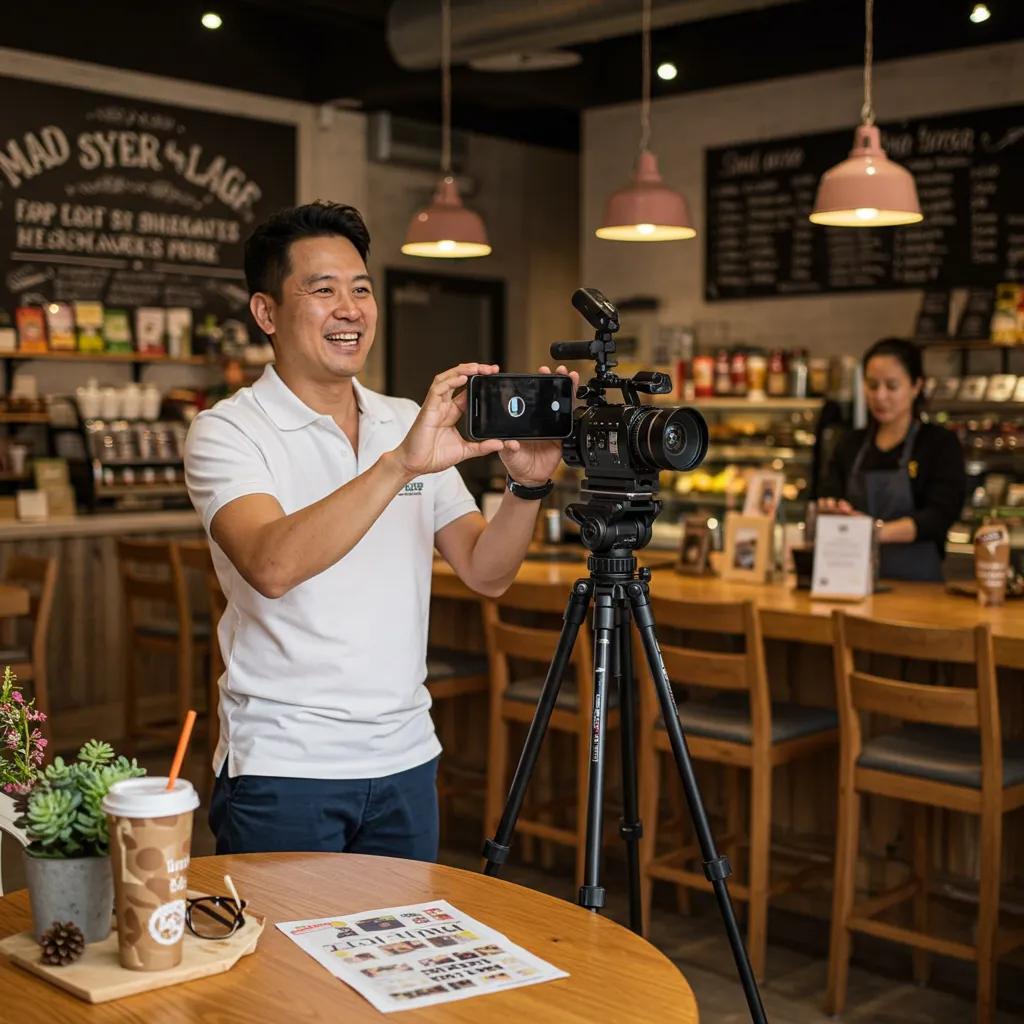
Short-form strategies for founders focus on a repeatable creative formula: an immediate hook, one clear value or story beat, and a direct CTA oriented to the funnel stage you care about (awareness vs lead capture). Platform cadence matters: publish multiple micro-tests per week, analyze retention and comments, and double down on formats that generate shares and saves. Repurposing is essential — extract 15–30 second clips from longer interviews, founder updates, or event footage to feed Reels, Shorts, and TikTok. Measurement should prioritize relative lift (views to clicks) and local engagement signals like map searches or booking page visits for direct attribution.
Below is a quick platform comparison to guide where to test first.
Intro: This table summarizes platform-specific ideal lengths, best content types, and distribution tips for short-form channels.
| Platform | Ideal Length | Best Content Types | Distribution Tip |
|---|---|---|---|
| TikTok | 15–60 seconds | Trends, behind-the-scenes, quick tips | Use native trends and duet/remix formats |
| Instagram Reels | 15–30 seconds | Branded tips, founder moments, how-tos | Cross-post to Stories and feed for reach |
| YouTube Shorts | 15–60 seconds | Highlights, tutorials, event clips | Use Shorts shelf-friendly thumbnails and titles |
Summary: Start with one platform, publish frequent micro-tests, and reuse high-performing clips across channels to maximize reach with minimal extra production cost.
How to Use TikTok, Instagram Reels, and YouTube Shorts for Business Growth?
Each platform favors slightly different creative choices, but all reward strong openings, vertical framing, readable captions, and immediate value. TikTok thrives on native trends, creative edits, and authentic storytelling; Reels performs well for polished how-tos and founder narratives that cross over to the main feed; Shorts amplifies discoverability via YouTube’s search ecosystem and benefits from clear, searchable titles. Repurposing workflows typically involve creating a master vertical file, extracting multiple hooks, and using platform-specific metadata like hashtags and pinned comments to guide discovery. Measure by retention and action events, then iterate on the creative elements that correlate with conversions.
What Are Examples of Successful Short-Form Videos by Local Businesses?
Local businesses succeed with short-form by aligning content to neighborhood context, unique offers, and founder personality. Example 1: A café posts a 20-second behind-the-scenes showing a signature drink being made, ending with a limited-time local offer; the clip drives foot traffic through urgency. Example 2: A service provider shares a quick before/after with a client permissioned testimonial that showcases outcome and includes a direct booking CTA in the caption; this converts social views into booked consultations. Local context — referencing landmarks, events, or townspeople — increases relevance and shareability among nearby audiences. These examples highlight the structural elements that should be replicated: hook, proof, and single CTA.
For founders ready to execute these tactics professionally, regional production options such as Viral Video Production and a Social Media Video Production Team can handle filming, editing, and multi-platform distribution as a done-for-you service, allowing founders to focus on business outcomes rather than production logistics.
How Does Interactive Video Drive Engagement and Lead Generation?
Interactive video drives engagement by turning passive viewing into an active choice path, embedding elements that prompt clicks, votes, or purchases inside the player. Mechanically, interactive elements track engagement events that feed directly into a lead-generation funnel — for example, a poll that segments user interest triggers a follow-up email sequence. The value lies in higher time-on-video, improved data capture, and more qualified leads because interactions reveal intent. For local businesses, interactive video can be used to qualify prospects for booking, collect preferences for service recommendations, or surface product variants, making conversion flows faster and measurable.
Intro: The following table shows common interactive elements, their best use cases, expected engagement lift, and lead-gen mechanics to help plan implementations.
| Interactive Element | Best Use Case | Expected Engagement Lift | Lead-Gen Mechanic |
|---|---|---|---|
| Clickable CTA buttons | Drive bookings or purchases | 10–30% higher CTR | Direct to form or booking |
| Polls and quizzes | Preference capture | 15–40% participation | Segment and follow-up |
| Branching paths | Personalized experiences | 20–50% increased time | Tailored CTAs by branch |
| Shoppable overlays | E-commerce conversion | Variable, product dependent | Direct product checkout |
| Form embeds | Lead capture within video | High for engaged viewers | Immediate CRM push |
Summary: Start with lightweight interactive elements like CTAs and polls to validate funnel lift, then expand to branching and shoppable overlays once technical and CRM integration is tested.
What Interactive Elements Boost Viewer Participation?
Interactive elements such as clickable CTAs, polls, quizzes, branching paths, and shoppable overlays typically increase participation because they lower the effort to take the next step and make the experience conversational. Polls are useful for feedback and segmentation, while quizzes can qualify prospects and route them to specific offers. Branching paths create a sense of agency, increasing time spent and allowing the video to serve multiple intents. Shoppable overlays reduce friction to purchase by connecting a product view to an immediate checkout. When selecting elements, choose those that match your funnel stage and technical capacity, and instrument events to capture the data into your CRM.
How Can Interactive Video Support Local Business Lead Generation?
Interactive video supports lead generation by combining engagement signals with direct capture mechanisms to produce warmer, better-qualified leads. A typical funnel uses an interactive opener (poll or quiz) to segment viewers, presents targeted content based on answers, and ends with a CTA that opens a booking form or special local offer. Tracking should include video interaction events, CTRs, form completions, and downstream conversions like bookings or purchases. For attribution, tie interactive events to UTM or tokenized links that map back to your CRM to measure real revenue impact. This approach shortens the path from awareness to conversion for local offers such as appointments or event RSVPs.
Why Is Vertical Video Essential for Mobile-First Audiences?
Vertical video is essential because it occupies the full screen on mobile devices, increasing visual impact and completion rates compared with repurposed landscape assets. The mechanism is straightforward: vertical framing maximizes subject scale and leaves key real estate for captions and on-screen CTAs without forcing viewers to rotate their devices. For creators, vertical framing influences composition, text placement, and pacing to ensure the hook and CTA are within the safe zones. The result is improved organic reach and ad performance when creatives are optimized for vertical consumption, making vertical-first production a best practice for mobile-first campaigns.
How to Create Vertical Video Ads That Capture Attention?
Create vertical ads by prioritizing a strong visual hook in the first one to three seconds, placing readable captions near the subject, and ensuring the CTA is visible without obstructing faces or key product details. Use a visual hierarchy that scales the primary subject to most of the frame, add branded accents that don’t distract, and design CTAs for thumb interaction. Storyboard shots with mobile composition in mind and test multiple thumbnail and opening text variations to find the combination that maximizes retention. Performance expectations should be managed: vertical ads often show higher completion but require crisp first-second hooks to outperform landscape repurposes.
What Are the Benefits of Vertical Video for Social Media Marketing?
Vertical video benefits social campaigns through higher viewability, greater screen presence, and better integration with native feed behaviors on platforms like Reels and TikTok. Organic reach often improves because users are more likely to watch full-screen content, and ad auctions may reward creatives with stronger engagement signals. Vertical-first creatives also streamline production by removing the need for multiple aspect-ratio shoots, saving time across repurposing. For local advertisers, vertical ads make offers and CTAs more salient, which supports faster decision-making and improved local conversions.
How Is Live Streaming Growing as a Video Marketing Tool?
Live streaming grows because audiences value real-time interaction and authenticity, and modern platforms make producing and promoting streams accessible to small teams. Live formats — Q&A sessions, product demos, event coverage, and behind-the-scenes — build trust by allowing direct conversation and immediate responses that static video cannot. Technically, live streams require planning for promotion, moderation, and post-event repurposing, but the payoff includes higher engagement and improved community loyalty. Brands that pair live events with follow-up assets and interactive CTAs convert ephemeral engagement into long-term leads and repeat customers.
What Are Effective Live Streaming Strategies for Local Events?
Effective live streaming for local events includes pre-event promotion across channels, a clear run-of-show for on-stream segments, and post-event repurposing into short-form clips for broader distribution. Pre-event tactics involve teasers and countdowns; during the stream use live CTAs and moderated Q&A to drive interaction; after the event, edit highlights and testimonials into short reels to extend reach. Staffing includes a producer, a host, and a moderator to handle chat, while a follow-up sequence should convert engaged viewers into bookings or newsletter signups. Tracking viewer retention and chat engagement helps refine future streams.
How Can Billings Businesses Use Live Streaming to Build Authentic Connections?
Billings businesses can use live streaming to showcase founders, spotlight local events, or host education sessions that resonate with community members. A founder Q&A or live demo at a well-known local spot creates familiarity and drives local discovery through geo-relevant promotion. Use chat to solicit questions and local suggestions, then follow up with viewers via email or offers tailored to the stream’s audience. Measure success by viewer retention, chat-to-conversion rates, and local engagement signals like appointment bookings or local searches.
What Other Emerging Video Marketing Trends Should Local Businesses Know?
Beyond core formats, emerging trends include user-generated content (UGC) as social proof, AR/VR for immersive experiences, shoppable video for transactional friction reduction, and stronger emphasis on video SEO and accessibility. UGC increases authenticity and trust by showing real customers using products; AR/VR creates immersive try-ons or virtual tours that can shorten the sales cycle in higher-consideration purchases. Shoppable overlays and video SEO (transcripts, schema) improve conversion and discoverability respectively. Small businesses should evaluate these trends as pilots, prioritizing low-cost UGC and basic video SEO before larger AR/VR investments.
How Does User-Generated Content Influence Consumer Trust?
UGC influences trust by providing social proof that prospective customers perceive as more authentic than brand-created content, which increases conversion likelihood. Soliciting UGC through contests, review requests, or simple prompts creates a stream of shareable assets that can be repurposed into ads and organic posts. Important considerations include securing permissions, offering incentives, and presenting UGC alongside contextual captions or metadata to enhance credibility. For local businesses, featuring neighbors, events, or local landmarks in UGC increases relatability and strengthens community trust.
What Role Do AR and VR Play in Immersive Video Experiences?
AR and VR deliver immersive experiences such as virtual try-ons, property tours, or product demos that reduce uncertainty and increase buyer confidence for complex purchases. Entry-level AR options like filter-based try-ons or 3D overlays can be cost-effective pilot projects, while full VR experiences require higher investment and longer timelines. For local businesses, start with augmented features that showcase product fit or spatial context — for example, virtual staging or interactive menus — and measure impact before committing to larger VR builds. Pilots help assess cost versus conversion uplift and inform scaling decisions.
How Does Billings LaunchPad Help Implement These Video Marketing Trends?
Billings LaunchPad supports local businesses in Billings, Montana with a full-service approach to video marketing that maps directly to the trends covered above. Core offerings include onsite video production, viral video production, social media video production, event video and photos, founders videos, and educational video — services designed to produce, edit, and distribute content as a done-for-you model. The agency emphasizes AI-enhanced videos and offers an onsite production team that can compress content creation timelines to deliver high-volume assets for multi-platform distribution. Their approach centers on unique digital ideas that build authority and create trust to consistently bring new clients and customers.
- Done-For-You Production: Full-service filming, editing, and distribution across social platforms to reduce client workload.
- AI-Enhanced Videos: Use of AI workflows to speed editing and personalize variants for targeted campaigns.
- Viral Video Production: Creative formats and hooks designed specifically for short-form virality and rapid audience reach.
Billings LaunchPad positions these services with outcome-focused promises such as getting a year’s worth of content produced or rapid short-form content bursts, and they offer a New Client Special Offer providing $100 off initial packages to encourage trials. For founders seeking a discovery conversation about which trend to pilot first, booking a consultation with a local production partner clarifies scope and expected outcomes.
Which Services Support AI-Enhanced and Viral Video Production?
Services that support AI-enhanced and viral production include onsite filming (to capture authentic local footage), post-production that leverages AI-assisted editing and captioning, and specialized viral formats crafted for platform algorithms. Deliverables typically include multiple short-form variants, captioned vertical assets, and distribution-ready files configured for TikTok, Reels, and Shorts. Starter packages often focus on rapid content delivery and multi-platform posting schedules designed to test messaging and optimize for engagement.
How Can Local Founders Benefit from Customized Video Marketing Packages?
Customized packages follow a simple workflow: strategy session to define goals, onsite shoot to capture assets, AI-assisted editing to create variants, and distribution plus performance reporting to refine future content. Typical outcomes include a steady pipeline of short-form clips for social channels, repurposed longer-form assets for owned channels, and measurable lead-gen improvements via interactive elements and CTAs. With the New Client Special Offer of $100 off, local founders can lower the barrier to a pilot project that validates video ROI and builds a repeatable content engine.
Frequently Asked Questions
What are the key benefits of using interactive video in marketing?
Interactive video enhances viewer engagement by allowing audiences to actively participate through clickable elements, polls, and quizzes. This interactivity not only keeps viewers interested but also provides valuable data on viewer preferences and behaviors. For marketers, this means higher retention rates and the ability to segment audiences based on their interactions. Additionally, interactive videos can lead to improved conversion rates as they guide viewers through a personalized journey, making it easier to capture leads and drive sales.
How can local businesses effectively implement short-form video strategies?
Local businesses can implement short-form video strategies by focusing on creating content that is concise and engaging. Start with a strong hook in the first few seconds to capture attention, followed by a clear value proposition and a direct call-to-action (CTA). It’s essential to publish frequently and analyze performance metrics to understand what resonates with the audience. Repurposing existing content into shorter clips can also maximize reach while minimizing production costs, allowing businesses to maintain a consistent presence across platforms.
What role does user-generated content (UGC) play in video marketing?
User-generated content (UGC) plays a crucial role in video marketing by providing authentic testimonials and social proof that can enhance brand trust. When potential customers see real users engaging with a product or service, it increases their likelihood of conversion. Local businesses can encourage UGC by running contests, asking for reviews, or prompting customers to share their experiences. This not only generates valuable content but also fosters community engagement and strengthens customer relationships, making UGC a powerful tool in marketing strategies.
How can businesses measure the success of their video marketing campaigns?
Businesses can measure the success of their video marketing campaigns through various metrics, including view counts, engagement rates, click-through rates (CTR), and conversion rates. Analyzing audience retention can provide insights into how well the content holds viewers’ attention. Additionally, tracking interactions with CTAs and lead generation forms can help assess the effectiveness of the video in driving desired actions. Using analytics tools to gather data across platforms will enable businesses to refine their strategies and improve future campaigns based on performance insights.
What are the advantages of live streaming for local businesses?
Live streaming offers local businesses the advantage of real-time interaction with their audience, fostering a sense of community and authenticity. It allows businesses to showcase events, product launches, or Q&A sessions, creating an engaging experience that static videos cannot replicate. Live streams can also drive immediate responses and feedback, enhancing customer relationships. Furthermore, the content can be repurposed into shorter clips for social media, maximizing reach and engagement while providing valuable insights into audience preferences and behaviors.
How can augmented reality (AR) enhance video marketing efforts?
Augmented reality (AR) can significantly enhance video marketing efforts by providing immersive experiences that engage viewers in unique ways. For example, AR can allow customers to visualize products in their own environment, such as trying on clothes or seeing how furniture fits in their home. This interactivity not only captivates audiences but also reduces uncertainty in purchasing decisions, leading to higher conversion rates. Local businesses can leverage AR to create memorable marketing campaigns that stand out and resonate with tech-savvy consumers.
What are some best practices for creating vertical video content?
Creating effective vertical video content involves several best practices. First, ensure that the primary subject is centered and occupies most of the frame to maximize visual impact. Use readable captions and clear CTAs that are easily visible without obstructing key visuals. Start with a strong hook in the first few seconds to capture attention, and keep the content concise and engaging. Testing different thumbnails and opening text can help identify what resonates best with the audience, ultimately improving retention and engagement rates.
Conclusion
Embracing the latest video marketing trends can significantly enhance local businesses’ engagement and conversion rates. By leveraging AI, short-form content, and interactive formats, brands can create compelling narratives that resonate with their audiences. For those ready to elevate their marketing strategy, consider exploring our tailored video production services. Start your journey towards impactful video marketing today.