DIGITAL MARKETINGSOCIAL MEDIA MANAGEMENT

Practical Social Media Tactics to Drive Real Engagement for Billings Businesses
Many local businesses post regularly but still struggle to turn likes into meaningful conversations, shares, and bookings. This guide gives clear, research-backed tactics you can use right away to change that. You’ll learn how to define a Billings audience, prioritize video-first content, use geotags and local hashtags, run interactive campaigns, apply AI responsibly, and measure what actually leads to bookings. Each section explains the idea, why it works for small, local businesses, and the exact steps you can take this week. Expect checklists, comparison cues, and ready-to-use templates for Reels/Shorts, live streams, UGC drives, contests, and analytics so you can convert interactions into measurable outcomes.
How do Billings businesses find and reach the right local audience for better engagement?
Start by defining who shows up, what they care about, and how they behave on each platform. When your content speaks to the people most likely to comment, share, or book, everything else becomes easier. Local targeting works because proximity and local culture make messages feel relevant—those signals drive interaction and get noticed by feeds. Map your primary audience segments first, then layer in platform habits and best times to post. That foundation makes tactics like video hooks and neighborhood hashtags far more effective. The next section breaks down the local segments to prioritize.
Who should Billings businesses aim their social content at?
Segmenting your local audience clarifies who to target and which posts prompt action. In Billings, typical segments include founders and small-business operators, long-time local customers, event-goers and visitors, and community-minded shoppers. Founders and owners respond to practical tips—time-savers, behind-the-scenes systems, and peer-focused founder videos. Long-time locals engage with hometown stories, nostalgia, and promos tied to places they know. Tourists and event attendees look for quick tips, photo spots, and highlights they can share immediately—those posts drive saves and wider reach.
Why do local details matter for getting people to react and reply?
Local insight shapes how you frame a post, when you publish it, and which cultural cues trigger conversation. Posts that reference local events, landmarks, or neighborhood language invite recommendations and memories—natural comment starters. Use community groups, platform audience tools, and event calendars to find those hooks. Geographically relevant content also shows up in local searches and feeds, and that discoverability often sparks longer comment threads that platforms amplify. The next section shows how short-form and founder-led video formats use local insight to build trust and lift engagement.
Which video approaches produce the biggest engagement gains for local businesses?

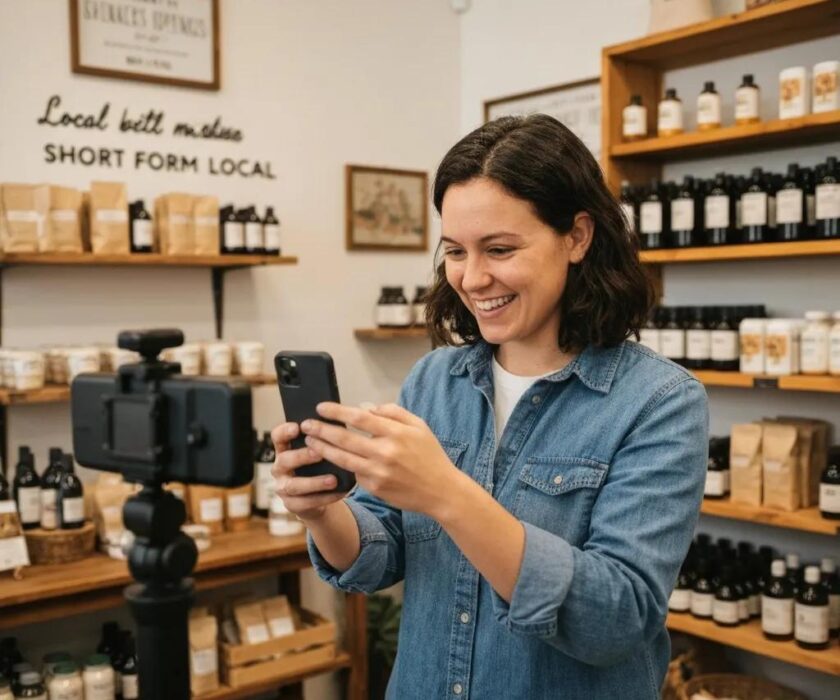
Video-first content wins because motion grabs attention, shows emotion, and invites immediate responses. Platforms often favor short-form formats like Reels and Shorts, which can boost reach and comment volume. The pattern that works: a sharp visual hook in the first three seconds, useful or entertaining content in the middle, then a low-friction prompt to react or share. Use short clips for broad reach, live streams for real-time conversation, and founder videos to build ongoing dialogue and trust. Below are practical notes on short-form mechanics and live/founder formats, plus a quick format comparison to help you choose.
How do Reels and Shorts actually increase interaction?
Short-form clips match how people scroll: fast consumption, quick reactions, and easy sharing. The production formula is hook → value → CTA: grab attention immediately, deliver a single useful idea or moment, then ask for a simple action (answer a question, tag someone, save). Production tips: add captions for sound-off viewers, choose a punchy thumbnail, frame for mobile, and split longer footage into multiple short clips for cross-posting. Build a micro-workflow—plan, film, edit, post, repurpose—to maintain consistency and test different CTAs to see which prompt the most comments and saves.
Short-Form Video: Revolutionizing Marketing and Consumer Engagement
Short-form video has reshaped how brands capture attention by matching fast, story-driven consumption habits. These bite-sized, emotionally resonant pieces are easy to share and ideal for sparking quick conversations—making them a powerful tool in local marketing strategies as platforms continue to reward engaging, short-content formats.
When should you use live streams and founder videos to build trust?
Live video and founder-led clips deepen interaction by opening real-time dialogue and showing the people behind the business. Live Q&As, event streams, and behind-the-scenes moments invite immediate comments and let you respond in the moment—this boosts watch time and repeat visits. Short founder updates create ongoing micro-conversations and build familiarity that can convert to calls or bookings. Use a simple checklist—topic, three prompts, tech check, CTA—to turn these formats into reliable comment and DM drivers.
Different video formats signal different outcomes. Use the table below to match format to goal.
| Video Type | Best Uses | Expected Engagement Signal |
|---|---|---|
| Short-form (Reels/Shorts) | Awareness, quick tips, event highlights | High views, comments, shares |
| Live Streams | Q&A, product demos, event coverage | Real-time comments, extended watch time |
| Founders Videos | Trust-building, authority, local storytelling | DMs, meaningful comments, profile visits |
| Repurposed Clips | Multi-platform distribution | Incremental shares and saves |
That comparison helps you pick the right mix and set a production cadence to keep engagement steady as your audience grows.
Many local businesses find it easier to scale video with a local production partner. Billings LaunchPad offers a Done-For-You content service that handles shooting, editing, and distribution for Reels, Shorts, and founder videos aligned with platform best practices. Their process focuses on fast production and repurposing so a single shoot can generate weeks or months of scroll-stopping clips—ideal for founders who’d rather delegate production while keeping control of the message. If you want video that turns views into comments and bookings, a discovery call will outline timelines and deliverables.
How can geotags and local hashtags boost discovery and interaction?
Geotags and smart local hashtag use improve discoverability and signal relevance to both people and platform algorithms—when used correctly, they increase local comments and shares. Geotags put your posts into neighborhood and event feeds; curated hashtag sets help niche discovery and surface your content around local happenings. Encouraging customers to post with a branded local tag creates UGC that fuels conversation and social proof. The sections below give checklists and explain how local UGC prompts turn attention into loyalty and engagement.
What are the best practices for geotags and hashtags in Billings?
Start with research: find neighborhood tags, event hashtags, and community handles that locals actually use, and include them in captions and Stories. Use a layered set—one hyper-local, two regional, and one branded—to balance reach and relevance while avoiding spam. Geotag event posts, landmarks, and partner locations to trigger local searches and invite recognition from attendees. Build geotagging into event workflows—pre-event posts, live geotagging, and post-event recaps—to create multi-post conversations that keep local interest alive.
- Geotag event posts and Stories for immediate local discovery.
- Use a three-tier hashtag set: branded, neighborhood, and regional tags.
- Rotate hashtag sets so your reach stays fresh and avoids repetition.
Those simple habits increase the chance locals will find and respond to your posts, which raises sustained engagement and boosts neighborhood visibility.
How does local UGC help build community and trust?

Local UGC turns customers into content creators, multiplying reach and creating authentic social proof that drives comments and shares. Use a four-step mechanic: ask (give a clear prompt), feature (show submissions), reward (offer recognition or small incentives), and repurpose (use entries across channels). Try photo contests tied to local landmarks, story prompts about favorite Billings memories, or event check-ins that encourage tagging friends. Keep moderation and permission simple and clear—showcasing contributors publicly builds advocacy and keeps the conversation going.
- Ask customers to post with a branded local hashtag and tag your profile.
- Feature top UGC weekly to spotlight contributors.
- Offer local rewards (discounts or recognition) to encourage participation.
Featured UGC becomes a recurring conversation starter that drives repeat comments and local referrals. Billings LaunchPad includes UGC campaign setup and hashtag strategy in its Done-For-You distribution packages, handling prompts and moderation so businesses can focus on serving customers while engagement grows.
Which tactics reliably build an engaged local social community?
Community-building leans on two-way formats—contests, polls, and influencer partnerships—that are designed to prompt comments, saves, and shares. These formats tap into reciprocity and social validation while creating predictable engagement spikes and reusable content. The tactics below balance organic interaction with manageable moderation and measurement so you can scale community efforts without burning resources. First, we’ll cover contests and polls with quick templates, then how to work with local influencers to expand reach credibly.
How do contests, polls, and interactive posts increase engagement?
Contests and polls work because they provide a low-effort prompt plus a clear reward—and platforms often boost posts that spark interaction. Keep rules simple and transparent and require an action that generates visibility (comment to enter, tag a friend, or submit a photo). Try these three templates now:
- Comment-to-win: Ask followers to name their favorite local spot and tag a friend to enter.
- Photo submission contest: Invite UGC using a branded hashtag and pick weekly winners.
- Poll + follow-up: Run a Story poll, share the results, then invite discussion in the feed comments.
Keep entries easy, spotlight winners openly, and maintain clear rules—well-run contests convert casual viewers into repeat participants and create moments that people want to share across Billings.
Why partner with local influencers to grow reach and credibility?
Local influencers amplify credibility because trusted community voices turn awareness into action. Choose partners by audience fit and engagement quality rather than follower count—micro-influencers often drive more conversation because their followers trust them. Set clear deliverables (feed post, Stories, short video) and ask for engagement-first CTAs like a question or local challenge. Measure comment rates, saves, and profile visits to evaluate ROI and refine future partnerships.
- Prioritize micro-influencers with strong local engagement.
- Define deliverables that encourage conversation (question-led CTAs).
- Track post-level engagement and any resulting leads or bookings.
These collaborations broaden local credibility and spark cross-audience conversations that lift overall interaction and deliver measurable outcomes for future campaigns.
How can AI make social media work harder for local founders?
AI can speed up idea generation, recommend better posting times, and surface audience patterns that matter locally. Used with human review and brand guardrails, AI boosts output without losing the brand’s voice. Practical uses include drafting caption variations, suggesting local-friendly post ideas, and predicting optimal posting windows from past data. Build safe AI processes with clear voice guidelines and human review so recommendations stay authentic. The sections below outline tool types and how AI insights can guide tactical shifts that increase comments and conversions.
Which AI tools help create and schedule engaging posts?
Helpful AI tools for small businesses fall into three groups: ideation assistants, creative helpers, and scheduling/optimization platforms. Ideation tools generate headline and caption options to A/B test; creative tools batch-edit clips and suggest thumbnails; scheduling tools analyze history to recommend posting windows. Use AI to draft several caption options, then pick the one that matches your local tone and references. Always schedule after a human review to catch errors. Combined thoughtfully, these tools increase content velocity while protecting quality.
- Use ideation AI to produce caption alternatives for testing.
- Employ creative-assist tools to batch-repurpose video clips.
- Use scheduling AI to identify the best local posting windows.
When used together, these tools free founders to focus on high-value interactions—like live Q&As—while AI handles repetitive creative work.
How can AI insights optimize your engagement strategy?
AI can cluster engagement patterns, surface top-performing themes, and flag the times your local followers are most active. Those outputs point to tactical changes—shift formats, tweak CTAs, or reallocate time slots. Treat AI suggestions as hypotheses: test the change, measure the result, and iterate. Keep ethical considerations front of mind—protect user privacy and avoid over-personalization that feels intrusive. Maintain transparency and human oversight as you apply AI recommendations.
- Treat AI output as testable hypotheses; validate with A/B tests.
- Move quickly on signals that increase comments or conversions.
- Balance personalization with privacy and your brand values.
These steps turn AI insights into clearer paths from engagement to bookings and measurable interaction improvements.
AI-Driven Sentiment Analysis for Social Media Marketing Strategies
Social media is a primary channel for reaching audiences and understanding their responses. AI-driven sentiment and engagement analysis helps marketers identify which themes, tones, and formats spark conversation across platforms. Using these insights—paired with careful audience research—lets brands tailor content that resonates locally while monitoring user reactions across text, images, and video.
How should businesses measure and improve social media engagement?
Measure what matters: track a focused set of KPIs, connect engagement to local outcomes, and run a simple loop—measure → hypothesize → test → iterate. Core KPIs are engagement rate, comment rate, share rate, CTR, and conversion-to-booking—metrics that link social activity to revenue or inquiries. Combine native platform insights with cross-platform analytics and web tracking to build a monthly dashboard, then treat each metric as a signal to guide content and timing decisions. The subsections below define the key KPIs and recommend tools and cadences for continual improvement.
Which KPIs best reflect social interaction and business impact?
The most actionable KPIs for local businesses are engagement rate, comment rate, share rate, reach, CTR, and conversion-to-booking. Engagement rate (interactions ÷ impressions) shows resonance; comment rate measures conversation depth; share rate signals content people want to spread; CTR indicates traffic intent; and conversion-to-booking ties social effort directly to revenue. Set platform-appropriate benchmarks, track weekly for tactical tweaks, and monthly for strategic planning. Use UTM tags or native attribution to connect social campaigns to booking or lead forms and close the loop between engagement and business outcomes.
| Metric | Definition | Target / Benchmarks |
|---|---|---|
| Engagement Rate | Interactions ÷ Impressions | 1–5% typical (varies by platform) |
| Comment Rate | Comments ÷ Impressions | Higher indicates conversation; aim to grow 10% month-over-month |
| Share Rate | Shares ÷ Impressions | Signals viral potential; track increases after contests |
| CTR | Clicks ÷ Impressions | Reflects traffic intent; optimize CTAs to improve |
| Conversion-to-Booking | Bookings from social ÷ Clicks | Direct business impact; prioritize improving this metric |
Which analytics tools help you improve over time?
A practical analytics stack pairs native platform insights, a cross-platform analytics or scheduler, and GA4 (or equivalent) for web conversions. Native tools give post-level detail; cross-platform tools reveal distribution effects and cadence impacts; web analytics show how social traffic converts. Run a monthly review with a simple dashboard (top posts, top formats, KPI trends, and action tests) and assign one measurable action per review to keep momentum. If you’d rather outsource this work, Billings LaunchPad offers analytics reviews and optimization packages that align KPIs with local conversion goals and tracking.
| Tool Type | Example Use | Benefit |
|---|---|---|
| Native Platform Analytics | Post-level engagement and audience insights | Immediate post optimization |
| Cross-platform Analytics | Comparative performance across channels | Informs distribution strategy |
| Web Analytics (GA4) | Tracks conversions from social referrals | Measures ROI and booking conversions |
Use a layered toolset and a steady reporting cadence to turn engagement signals into repeatable actions that raise comment rates and convert traffic into bookings. Billings LaunchPad can handle reporting and optimization if you want an external partner to run that loop for you.
Frequently Asked Questions
How can local businesses better engage their audience on social media?
Start by making content that reflects your community: share local stories, use geotags and neighborhood hashtags, and invite customers to contribute. Interactive formats—polls, contests, and live videos—create two-way conversation. Learn your audience’s habits on each platform and tailor posts to those moments to encourage comments, shares, and bookings.
Why does user-generated content matter for engagement?
UGC adds authenticity and extends reach because customers’ posts feel real to other locals. Encourage UGC with simple prompts or contests, then show it off on your profile. That recognition builds trust and keeps conversations alive, turning participants into advocates.
How should businesses measure social media success?
Track a concise set of KPIs—engagement rate, comment rate, share rate, CTR, and conversion-to-booking—and connect them to real outcomes with UTM tags or native attribution. Review metrics weekly for quick adjustments and monthly for strategy shifts. Use those signals to prioritize the content and formats that actually drive leads.
How do local influencer partnerships work best?
Choose influencers whose audience matches yours and prioritize engagement over follower count. Agree on deliverables that spark conversation (a question, local challenge, or Story series) and measure comment rates, saves, and profile visits to judge impact. Micro-influencers often deliver the strongest local responses.
What can AI tools do to improve engagement?
AI can speed idea generation, suggest post times, and surface audience patterns—but always use human review. Let AI draft caption options or batch-edit clips, then pick the version that fits your local voice. Treat AI output as hypotheses to test, not final copy.
Which content types should local businesses prioritize?
Lead with content that shows who you are in the community: behind-the-scenes moments, customer stories, and local event coverage. Short-form videos, live sessions, and interactive posts like polls or contests are powerful for driving comments and shares.
How should businesses use geotags and hashtags to get discovered?
Use geotags for neighborhood and event posts and maintain a rotating set of hashtags: one hyper-local, a couple regional, and a branded tag. That mix improves discoverability without looking spammy—and keeps your content relevant to nearby audiences.
Conclusion
Effective social media engagement starts with local relevance and simple, repeatable tactics. Use audience insight, video-first formats, geotags, UGC, and measured AI support to create content that invites conversation—and track the metrics that tie those conversations to bookings. The templates and checklists here are designed to get you started this week. Put them into practice, measure the results, and iterate—Billings businesses can turn social interaction into real local growth.