VIDEO MARKETING

Getting Your Videos Seen: Effective Video Distribution Strategies to Maximize Reach and Engagement
Many great videos never find an audience because distribution is treated as an afterthought rather than a strategic channel. This guide explains how a deliberate video distribution strategy—covering channel selection, technical optimization, paid amplification, email amplification, measurement, and short-form trends—drives measurable reach, engagement, and leads for small and local businesses. You will learn which platforms to prioritize, how to optimize metadata and embeds for search and social, when paid promotion makes sense, and which KPIs to track to iterate toward ROI. The article maps practical workflows for repurposing long-form content into short-form clips, embedding videos on websites for SEO benefit, and using email and paid ads to convert viewers into prospects. Throughout, we highlight local-first tactics and operational examples that align with multi-platform distribution, video SEO, and modern short-form formats to help you get more views and more business from every video.
What Are the Best Video Distribution Channels for Small Businesses?
Choosing the right channels starts with matching your audience, content format, and business goals to each platform’s strengths. A distribution channel is a place where your video content can be published or promoted; each channel works differently because of audience intent, format norms, and discovery mechanisms. Prioritizing channels reduces wasted effort: platforms with strong native discovery or intent signals will deliver more views per post, while owned channels improve long-term discoverability and conversion. This section compares top platforms, shows when to use each, and outlines a simple prioritization framework for local businesses aiming to grow awareness, authority, or leads.
Which social networks and owned channels a small business should choose depends on content length and target action. Short-form, vertical clips perform best on discovery-driven apps that reward high watch-through rates and rapid engagement; longer how-to or product videos perform better on search-first platforms where users expect depth. The next subsections break platform strengths down into actionable format recommendations and a concise repurposing workflow for local teams.
Which Social Media Platforms Drive the Most Video Views?
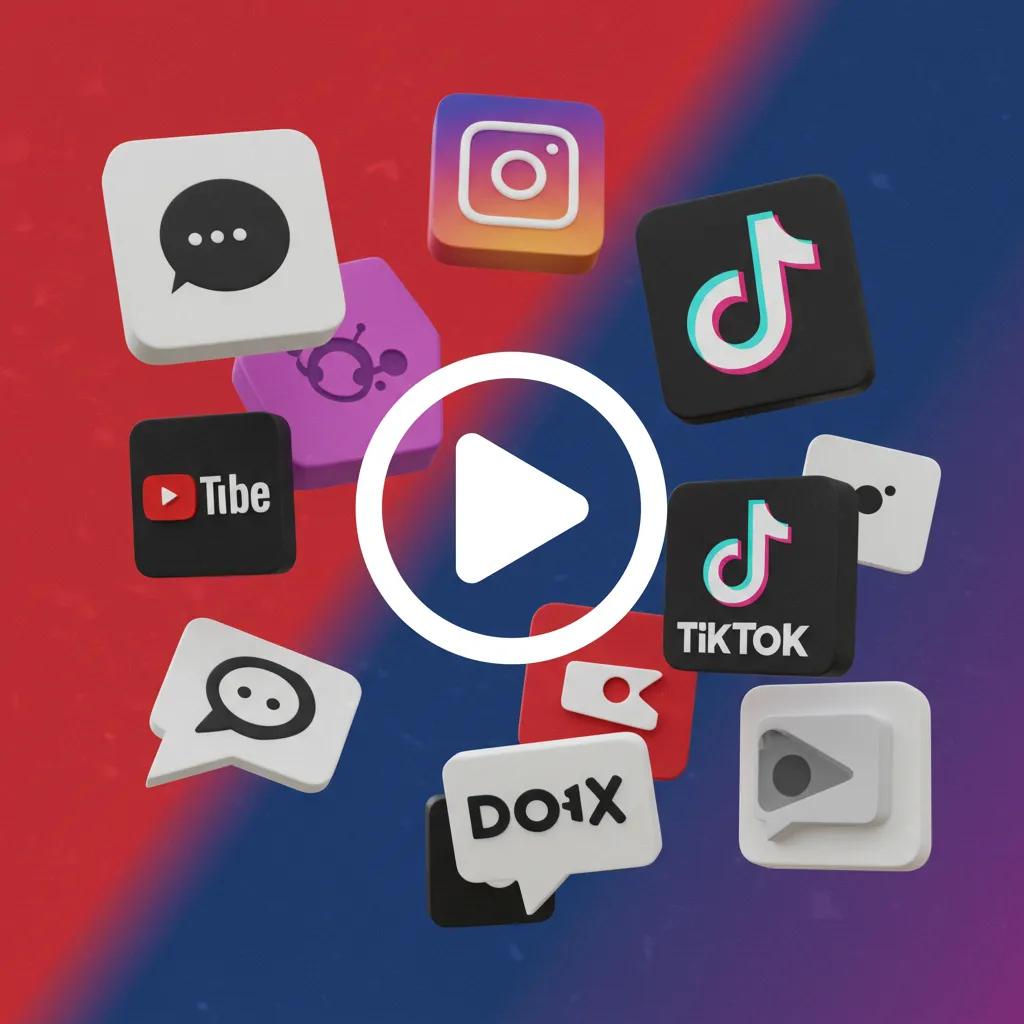
Different platforms excel at different discovery mechanisms: algorithmic surfacing, search intent, or social sharing. YouTube functions as a search engine for video and rewards discoverability through titles, thumbnails, and watch time, making it ideal for longer tutorials and evergreen explainers. TikTok and Instagram Reels favor short-form, trend-driven clips that can achieve rapid reach with creative hooks and native editing. Facebook still offers reach for community-focused promotions and local groups, while LinkedIn is effective for B2B thought leadership and founder storytelling. X is useful for short clips and driving conversations, and Tumblr can serve niche communities with visual storytelling.
For Billings-area businesses, prioritize the platform where your local audience spends time and the content format you can produce reliably. Local service demonstrations and customer stories can be uploaded to YouTube for search longevity, clipped into 15–30 second Reels or TikToks for discovery, and reshared into Facebook community groups for local reach. These choices inform production decisions like aspect ratio, captions, and thumbnail style and lead naturally into a channel comparison table for tactical planning.
Different platforms favor different formats and business outcomes. Below is a quick comparison to help Billings founders decide where to invest limited time and budget.
| Platform | Best Format / Strength | Use Case for Billings Businesses |
|---|---|---|
| YouTube | Horizontal and long-form; search discovery and playlists | Host how-to videos, service explainers, and case studies that attract organic search traffic |
| TikTok | Vertical short-form; trend-driven discovery | Quick behind-the-scenes, day-in-the-life, and local challenge videos to reach new audiences |
| Instagram Reels | Short-form vertical; strong engagement with existing followers | Brand-building clips, product demos, and community highlights that convert followers to customers |
| Mixed formats; groups and local sharing | Promote events, customer testimonials, and service announcements to local communities | |
| Short-to-mid form professional video | Founder stories, B2B service explanations, and credibility-building thought pieces |
This table clarifies where a local business should concentrate effort based on content type and intended outcome. The next section explains a repurposing workflow that converts a single shoot into multi-platform assets.
How Can Local Billings Businesses Leverage Multi-Platform Video Distribution?
A resource-efficient multi-platform workflow turns one shoot into dozens of assets that match platform norms and save production time. Start by recording a core long-form asset—an interview, demo, or walkthrough—that captures full context and key messaging. From that master file, create a 60–180 second edited version for YouTube or website, then extract 15–30 second clips with a single-hook intro for TikTok and Reels. Add captions, platform-native thumbnails or cover frames, and export vertical and horizontal aspect ratios. Schedule the clips using a calendar that staggers posts to test creative hooks and CTA placements.
Repurposing reduces production overhead while expanding reach: the long-form asset builds search equity and the short clips drive discovery and follower growth. For local businesses, map content to local events, promotions, and seasonal services so each clip reinforces local relevance. Next we outline concrete optimization practices that make videos more discoverable across both search and social systems.
After outlining channels and repurposing, consider a done-for-you distribution workflow that automates cross-platform publishing and format optimization. Billings LaunchPad offers a Content Distribution service that manages native uploads and format conversions across major networks including Facebook, Instagram Reels, TikTok, YouTube, LinkedIn, X, and Tumblr. Their team combines onsite filming with turnkey editing and distribution to help local founders convert video views into leads without adding operational burden. This operational example shows how a local-focused agency can convert channel strategy into repeatable execution while keeping your messaging consistent across platforms.
How Do You Optimize Your Videos for Maximum Online Visibility?

Video optimization improves both platform discovery and search engine visibility by connecting video content to the right queries and social signals. Video SEO combines metadata optimization (titles, descriptions, tags), technical markup (VideoObject schema, sitemaps), and accessible text (transcripts, captions) so platforms and search engines can index and surface your content. Optimized thumbnails and rapid watch-through time signal relevance to algorithms, while localized keywords and structured data signal business intent and geographic relevance. The following subsections cover the most impactful on-page and technical steps small businesses should implement.
What Are the Key Video SEO Best Practices for Local Businesses?
Video SEO for local businesses focuses on discoverability through localized metadata and crawlable content. Use clear, action-oriented titles that include primary keywords and a local modifier (city, neighborhood) where appropriate; craft descriptions that summarize key points, include relevant links to related resources, and contain time-stamped sections to aid both viewers and search indexing. Generate and attach full transcripts or closed captions to provide crawlable text and improve accessibility; transcripts also help platforms identify topic relevance. Implement VideoObject schema and an XML video sitemap to supply search engines with canonical metadata, duration, and thumbnail information.
Local keyword signals and structured data work together to enhance local video SEO. For Billings businesses, include location names and service keywords naturally in titles and descriptions so that both search engines and platform algorithms connect video content to local intent. The next subsection explains technical embedding and tracking practices that amplify these on-page efforts.
| Optimization Tactic | SEO Benefit | Implementation Tip |
|---|---|---|
| Localized Title & Description | Matches local search intent and improves CTR | Include city or neighborhood and primary service keyword within first 60 characters |
| Transcripts / Captions | Adds crawlable text and improves accessibility | Host transcripts on your website and upload caption files to platforms |
| VideoObject Schema | Structured indexing for search engines | Include schema with name, description, thumbnailUrl, uploadDate, duration, and contentUrl |
| XML Video Sitemap | Ensures search engines discover hosted videos | Reference video pages in sitemap and submit through your search console equivalent |
This table shows how specific technical tactics map directly to discoverability outcomes and practical implementation advice. Next we’ll explain how embedding videos on your website multiplies these benefits.
How Does Embedding Videos on Your Website Boost Video Reach?
Embedding videos on owned pages improves SEO, increases dwell time, and creates conversion points that are measurable and attributable. When you embed a video on a service or blog page, that page gains richer content, which can improve ranking for related queries and keep visitors engaged longer—both positive behavioral signals for search engines. Use responsive embeds so videos scale on mobile and avoid lazy-loading pitfalls that block indexing; provide transcripts on the same page to ensure the text is crawlable. Track plays with analytics events (for example, GA4 events) to connect watch behavior to on-site conversions and adjust CTAs accordingly.
Proper embedding requires attention to performance and structured data. Host the master video on a platform optimized for delivery, add a lightweight responsive embed, and include VideoObject schema on the page to surface the video to search engines. These steps increase discoverability and feed back into your distribution strategy by revealing which videos drive on-site actions and deserve further promotion.
After explaining embedding benefits, it’s useful to see how a local agency can implement these technical steps as part of a production-to-publishing workflow. Billings LaunchPad highlights website-video integrations in its done-for-you approach, advising clients on VideoObject schema, transcript management, and responsive embed practices that improve both platform discovery and on-site conversion. Their workflow demonstrates how technical SEO and production practices combine to make videos discoverable and trackable across channels.
What Paid Video Promotion Strategies Work Best for Local Businesses?
Paid promotion accelerates reach and helps validate creative and audience hypotheses quickly when organic momentum is limited. Paid video strategies for local businesses typically include targeted YouTube/Google campaigns for intent-driven viewers, Meta (Facebook and Instagram) placements for broad local reach and retargeting, and TikTok Spark or in-feed promotions for trend-driven discovery. The core mechanism is audience layering: combine geo-targeting, interest signals, and custom audiences (website visitors or customer lists) to ensure budget reaches potential local customers. Below are platform-specific tactics and a recommended test-and-scale budget approach.
How to Use Google Ads and Social Media Ads for Targeted Video Distribution?
Successful paid video campaigns segment audiences and tailor creative to intent. For YouTube and Google video campaigns, structure campaigns using remarketing lists for website visitors and in-market audiences for local service intent; prioritize skippable in-stream and discovery formats for efficiency. On Meta, create layered campaigns: a broad reach campaign to build awareness, followed by retargeting to engaged viewers with conversion-focused CTAs. On TikTok, test spark ads using organic posts to validate creative, then invest in in-feed promotions for proven content. Keep creative short, open with a strong hook, and include a platform-appropriate CTA early.
A clear campaign structure reduces wasted impressions and improves optimization speed. Use geo-fencing around your service area, exclude non-relevant regions, and set frequency caps for local audiences to avoid ad fatigue. The next subsection offers guidelines to decide when paid amplification and how to scale based on early results.
When Should You Invest in Paid Video Campaigns to Maximize ROI?
Invest in paid video when you have consistent creative production, a clear conversion funnel, and reliable tracking to attribute results. Signals that indicate readiness include: a library of at least 3–5 tested videos, functioning conversion events on your site (contact form, booking flow), and audience signals from organic performance showing which content resonates. Start with a pilot budget sufficient to generate meaningful engagement—often a modest local test over 2–4 weeks—and set clear success metrics such as cost per lead and view-through rate. If pilots produce low CPAs and positive engagement, scale incrementally while maintaining creative refresh to avoid ad fatigue.
- Paid campaigns should begin with a lean pilot budget to validate creative and targeting.
- Use distinct creative variants to test hooks, visuals, and CTA placement.
- Measure both engagement signals (view-through rate) and downstream conversions (form fills, calls).
A staged approach (pilot → optimize → scale) minimizes wasted spend and accelerates learning. Track candidate metrics weekly and adjust audience and creative based on performance. If paid campaigns consistently produce leads at acceptable CPAs, consider expanding reach or testing higher-funnel objectives such as brand lift.
Billings LaunchPad can design and run targeted Google and social video ad campaigns tailored to local audiences and budgets, starting with a discovery call to plan a paid test and measurable ROI milestones. Their structured approach emphasizes creative testing, geo-targeting within the Billings area, and measurement tied directly to lead generation so clients can evaluate scale decisions with confidence.
How Can Email Marketing Enhance Your Video Distribution Strategy?
Email provides a high-intent owned channel to drive repeat views, nurture prospects, and convert engaged viewers into customers. Embedding video thumbnails or animated GIFs in email increases click-through rates and encourages recipients to visit landing pages where conversions can be tracked. Personalization and segmentation ensure the right videos reach customers at the right stage—product demos to recent converters, tutorial clips to new subscribers, and testimonials to consideration-stage leads. Use clear subject lines that reference video and craft preheaders that emphasize value to increase open and click rates.
What Are Effective Ways to Incorporate Video in Email Campaigns?
Email clients vary in native video support, so use a thumbnail or animated GIF that links to a hosted landing page to ensure broad compatibility. Place the thumbnail above the fold, use a compelling overlay play icon, and craft subject lines that highlight the value of the video (for example, “Watch: 60-second local tour of our process”). Segment lists to send the most relevant video to each audience; for example, new subscribers receive short brand-intro clips while prospects receive demo-focused videos. A/B test subject lines, thumbnail treatments, and CTA copy to find combinations that maximize click-through and conversion.
- Use animated GIFs or static thumbnails that link to a video landing page for best compatibility.
- Segment by stage (new leads, prospects, customers) to maximize relevance.
- Test subject lines and CTAs to improve open and click performance.
These tactics increase the likelihood that video will drive downstream actions rather than passive views. The next subsection quantifies typical uplifts and explains design patterns for converting email-driven video traffic into leads.
How Does Video in Email Improve Engagement and Conversion Rates?
Video in email typically increases click-through rates and time on page, which can translate into higher lead conversion when the landing experience is optimized. Industry benchmarks suggest notable uplifts in CTR when an obvious video treatment is used, and conversion improves when the landing page contains a clear form or booking CTA. Design the accompanying landing page to continue the narrative from the email video—include trust elements, a succinct form, and a single primary CTA to reduce friction. Track UTM parameters and conversion events to attribute leads accurately to the email-driven video.
A simple micro-funnel (email → video landing page → form → booked call) ties engagement metrics to business outcomes and supports incremental optimization. Use the data to refine which video types drive the most qualified leads and adjust future email segmentation accordingly. The next major section explains which KPIs best reflect these results and how to act on them.
What Metrics Should You Track to Measure Video Distribution Success?
Measuring distribution success requires tracking a mix of engagement metrics and conversion KPIs to capture both content performance and business impact. Core metrics include impressions and reach (distribution), view-through rate and average watch time (engagement), click-through rate (distribution-to-action), and conversion rate or cost per lead (business outcome). Combining platform analytics with on-site events gives a fuller picture: YouTube or TikTok analytics show organic discovery and retention, while on-site analytics connect video viewers to form submissions or bookings. The table below maps KPIs to what they measure and practical actions to take based on their signals.
To act on metrics, set up consistent reporting and an experimentation cadence that uses data to prioritize channel investment and creative refresh. The next subsections define essential KPIs and a 90-day analytics playbook for iterative improvement.
Which KPIs Best Reflect Video Engagement and ROI?
Choose KPIs that match your distribution objectives: awareness, engagement, or conversions. For awareness, track reach and unique views; for engagement, prioritize watch time, retention curves, and view-through rates; for conversion, monitor CTR from video to landing page, conversion rate, and cost per lead for paid campaigns. Combine these with attribution windows to understand how video contributes across the funnel. Use thresholds—such as a 50% average view duration for mid-funnel content or a 2–5% CTR from social clips—to flag content that warrants scaling or creative revision.
Measuring Video Engagement Beyond Views for Promotion
The share of videos in the internet traffic has been growing, therefore understanding how videos capture attention on a global scale is also of growing importance. Most current research focus on modeling the number of views, but we argue that video engagement, or time spent watching is a more appropriate measure for resource allocation problems in attention, networking, and promotion activities. In this paper, we present a first large-scale measurement of video-level aggregate engagement from publicly available data streams, on a collection of 5.3 million YouTube videos published over two months in 2016. We study a set of metrics including time and the average percentage of a video watched. We define a new metric, relative engagement, that is calibrated against video properties and strongly correlate with recognized notions of quality. Moreover, we find that engagement measures of a video are stable over time, thus separating the concerns for modeling engagement and thos
Interpreting KPIs requires context: short-form viral clips may have high impressions but low on-site conversions, while longer educational videos may produce fewer views but higher conversion rates. The next subsection provides a practical analytics playbook for local businesses to test, measure, and iterate over 90 days.
| KPI | What It Measures | How to Act on It |
|---|---|---|
| View-Through Rate (VTR) | Percentage of viewers who watched to a defined point | If low, shorten hook or change thumbnail; if high, scale placement and retarget viewers |
| Average Watch Time | Depth of engagement per view | Use high-watch-time videos for homepage embeds and lead magnets |
| CTR (to site) | Ability of video to drive actions | Improve thumbnail, CTA, or landing relevance to raise CTR |
| Conversion Rate | Business outcomes from video-driven traffic | Test landing page variants and CTA placement to improve conversions |
This table links KPIs to direct optimization steps so teams can move from data to decisions. Next we describe a 90-day analytics playbook to operationalize these metrics.
How Can Local Businesses Use Analytics to Refine Their Video Strategy?
A 90-day analytics playbook includes setting baseline KPIs, running controlled creative tests, and iterating on winners. Start by instrumenting events: video plays, play percentage thresholds, clicks to landing pages, and form submissions. Run a two-week creative test across two audience segments and measure VTR and CTR; promote the winning creative in a follow-up budget allocation test for the next four weeks. Use monthly reviews to retire underperforming assets and refresh top performers with new CTAs or edits.
This iterative cycle—measure, test, optimize—ensures that distribution budgets and production time are allocated to content that demonstrably moves prospects through your funnel. After establishing this measurement discipline, the final major section examines how short-form trends in 2025 change creative and distribution priorities.
How Is Short-Form Video Dominating Social Media in 2025?
Short-form video dominates attention because mobile-first feeds and algorithmic recommendation systems favor high-engagement, loopable content that hooks viewers quickly. In 2025, platforms increasingly prioritize watch-through and rewatch signals, pushing creators to open with a clear hook within the first three seconds, use vertical framing, and lean on captions for silent autoplay. Short clips drive rapid follower growth and are the primary channel for top-of-funnel awareness; however, they must be repurposed into longer formats or landing experiences to capture search intent and convert leads. The following subsections give production best practices and local founder-focused content ideas.
Short-Form Video Content Workflow for Engagement
PurposeThis article describes a workflow designed for liaison librarians at an academic library creating short-form video content to increase student engagement with the library and improve student awareness of library resources and services.Design/methodology/approachThis article outlines a framework for creatin
Short-form performance is a mix of creative craft and distribution timing. The next section lists actionable production techniques for Reels, Shorts, and TikTok to maximize reach and engagement.
What Are the Best Practices for Creating TikTok, Instagram Reels, and YouTube Shorts?
Short-form videos should lead with a compelling, specific hook that sets audience expectations immediately, use vertical 9:16 framing, and include readable captions to capture viewers who watch silently. Favor tight edits and punchy pacing; keep CTAs focused and time them toward the end or in the caption. Use trending audio or native platform features to increase algorithmic preference, but prioritize authentic storytelling that connects to local identity for small businesses. Repurpose top-performing clips across platforms with native editing adjustments rather than straight cross-posts to respect each platform’s consumption norms.
- Hook in the first 1–3 seconds to reduce drop-off.
- Use captions and clear CTAs directing viewers to a single next action.
- Adapt trending formats while maintaining brand voice.
These production rules help maximize distribution lift while preserving production efficiency. The next subsection outlines content calendar ideas local founders can use to build consistent authority in their community.
How Can Billings Founders Use Short-Form Video to Build Brand Authority?
Local founders build authority with short-form video by showcasing expertise, community connection, and consistent storytelling. Use a weekly content calendar that mixes formats: founder insights, customer success clips, behind-the-scenes process videos, and local event highlights. For example, alternate between an educational tip (how you solve a common problem), a testimonial clip, and a short local spotlight to demonstrate community involvement. Measure authority-building by tracking follower growth, return viewers, and the share rate of clips, then use high-performing themes as the basis for longer-form explainers on your website or YouTube channel.
A consistent cadence that emphasizes locality and founder authenticity helps short-form content translate into trust and inquiries. Ending on action, consider scheduling a short strategy session to turn these content ideas into a repeatable production calendar.
For teams that prefer to outsource execution, Billings LaunchPad’s onsite video production and ‘done-for-you’ distribution model combines filming, editing, and multi-platform publishing to produce short-form assets tuned to platform dynamics and local audiences. Their approach emphasizes unique digital ideas for successful business outcomes and operational workflows that move from ideation to distribution without overburdening internal teams. If you want help converting a content calendar into a measurable lead pipeline, consider a video strategy discovery call with their team.
Book a free video marketing consultation with Billings LaunchPad to map a local-focused distribution plan, test paid amplification, and implement website-video integrations that turn views into leads. Philip Agyeman-Budu and the Billings LaunchPad team specialize in connecting production, technical SEO, and multi-platform distribution to help local businesses reach relevant audiences and measure real engagement improvements.
Frequently Asked Questions
What are the common mistakes to avoid in video distribution?
Common mistakes in video distribution include neglecting audience research, failing to optimize content for each platform, and not tracking performance metrics. Many businesses overlook the importance of understanding their target audience’s preferences and behaviors, leading to ineffective channel selection. Additionally, using a one-size-fits-all approach for video content can hinder engagement. Lastly, not measuring key performance indicators (KPIs) can prevent businesses from understanding what works and what doesn’t, making it difficult to refine their strategies for better results.
How can I repurpose existing video content effectively?
Repurposing existing video content involves breaking down longer videos into shorter clips suitable for various platforms. Start by identifying key moments or highlights from your long-form content that can stand alone. Create 15-30 second clips for platforms like TikTok and Instagram Reels, while also producing a 60-180 second version for YouTube. This approach not only saves production time but also maximizes the reach of your content by catering to different audience preferences and platform norms.
What role does audience engagement play in video distribution?
Audience engagement is crucial in video distribution as it directly impacts visibility and reach. Engaged viewers are more likely to share content, leave comments, and interact with your brand, which signals to algorithms that your video is valuable. High engagement rates can lead to better placement in feeds and recommendations, increasing the likelihood of reaching new audiences. Therefore, creating compelling content that encourages interaction is essential for maximizing the effectiveness of your video distribution strategy.
How can I measure the success of my video distribution strategy?
Measuring the success of your video distribution strategy involves tracking a combination of engagement metrics and conversion KPIs. Key metrics include view-through rates, average watch time, click-through rates, and conversion rates. Use analytics tools to gather data on how viewers interact with your videos and how these interactions translate into actions, such as form submissions or purchases. Regularly reviewing these metrics allows you to adjust your strategy based on what resonates with your audience and drives business outcomes.
What are the benefits of using paid promotion for video distribution?
Paid promotion can significantly enhance video distribution by increasing reach and visibility, especially in competitive markets. It allows businesses to target specific demographics and interests, ensuring that the content reaches the most relevant audience. Paid strategies can validate creative concepts quickly, helping to identify what resonates with viewers. Additionally, using paid ads can complement organic efforts, driving traffic to videos and increasing engagement, which can lead to higher conversion rates over time.
How can I optimize my videos for better search visibility?
To optimize your videos for better search visibility, focus on metadata, including titles, descriptions, and tags that incorporate relevant keywords. Use clear, action-oriented titles that reflect the content and include local modifiers when applicable. Additionally, provide transcripts and captions to enhance accessibility and crawlability. Implementing structured data, such as VideoObject schema, can also help search engines understand your content better, improving its chances of appearing in search results and increasing overall discoverability.
What types of video content are most effective for local businesses?
Local businesses benefit from video content that highlights community involvement, customer testimonials, and behind-the-scenes looks at operations. Educational content, such as how-to videos or service demonstrations, can establish authority and trust within the community. Additionally, short-form videos that capture local events or promotions can drive engagement and foster a sense of connection with the audience. Tailoring content to reflect local culture and values enhances relatability and encourages viewers to engage with the brand.
Conclusion
Implementing effective video distribution strategies can significantly enhance your business’s reach and engagement, driving measurable results. By leveraging the right platforms and optimizing your content, you can connect with your audience more effectively and convert views into leads. Don’t miss the opportunity to elevate your video marketing efforts—explore our services to create a tailored distribution plan today. Let us help you transform your video content into a powerful tool for growth and visibility.